


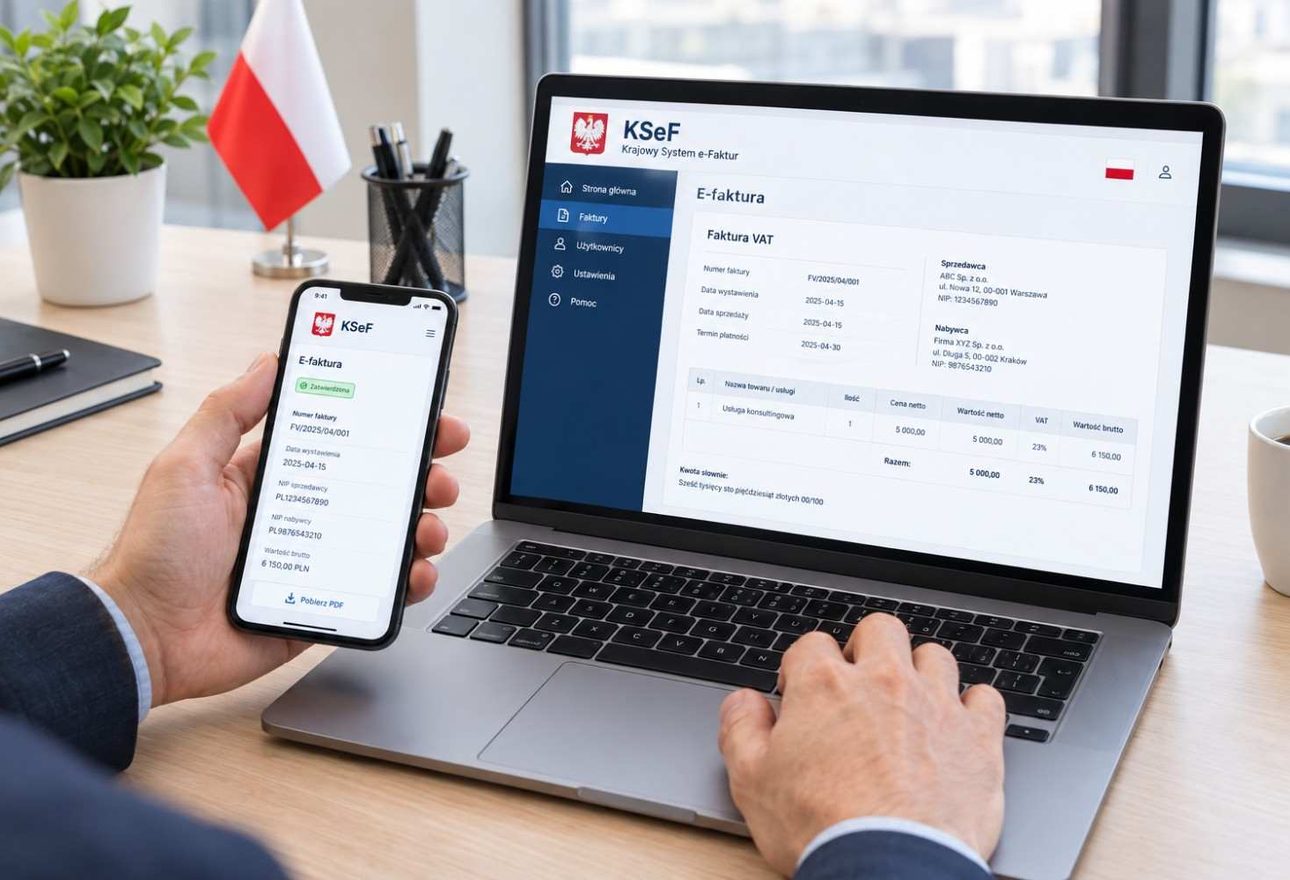
Introduction to Poland’s KSeF System
KSeF, which stands for Krajowy System e-Faktur (National e-Invoice System), is Poland’s centralised electronic invoicing platform developed and operated by the Polish tax authority, the National Revenue Administration (KAS). KSeF Poland represents Poland’s primary approach to mandatory structured invoicing for domestic business-to-business transactions.
Understanding KSeF is essential for any business operating in Poland, as the mandate is being extended progressively to all VAT-registered taxpayers. This guide explains how KSeF works, what it requires, and how businesses should prepare.
How the KSeF Platform Operates
KSeF operates as a central invoice repository where domestic B2B invoices are submitted for validation. Businesses can connect their ERP systems to KSeF through the required API and submit invoices using the FA_VAT XML schema. An SAP E-Invoicing Solution can help businesses connect SAP invoice processes with KSeF requirements and manage structured invoice data.
When an invoice is submitted, KSeF validates the document against the required schema and, if successful, assigns a unique KSeF reference number. SAP-based invoicing workflows can capture this reference and maintain the relevant invoice information across financial processes.
Invoices that fail KSeF validation are rejected and require correction before resubmission. An SAP E-Invoicing Solution can support validation, invoice data handling, submission workflows, and status tracking to help businesses manage KSeF-related invoicing processes.
KSeF Structured Invoice Requirements
KSeF invoices must comply with the FA_VAT XML schema published by the Polish Ministry of Finance. This schema defines all mandatory and optional invoice fields, including seller and buyer identification data, invoice number, issue date, item descriptions, quantities, unit prices, tax rates, and net and gross amounts.
The KSeF Poland schema is regularly updated by the Ministry of Finance to reflect changes in Polish VAT law and invoicing regulations. Businesses must ensure their ERP or invoicing systems are updated to comply with the current schema version.
Platforms such as FreshBooks ERP Connector and Germany XRechnung provide useful comparison points for understanding how structured invoice schemas function in different national e-invoicing implementations.
Businesses Affected by KSeF
KSeF applies to all VAT-registered businesses in Poland that issue domestic B2B invoices. The mandate was introduced on a phased basis, with large taxpayers (annual turnover above PLN 200 million) required to comply from February 2026, and smaller businesses following in subsequent phases.
Foreign businesses without a fixed establishment in Poland but registered for Polish VAT may also be subject to KSeF requirements for their domestic transactions. Businesses should confirm their KSeF obligations with their Polish tax advisor to ensure timely compliance.
Understanding Belgium e invoice and SAP E-Invoicing Solution frameworks helps provide context for how similar mandatory e-invoicing mandates are structured in other EU markets.
KSeF Invoice Issuing and Receiving Process
To issue a KSeF invoice, the seller generates an FA_VAT XML document in their ERP or invoicing system and submits it to KSeF via the API. Upon successful validation, KSeF returns a unique invoice identifier and a timestamp. The seller then provides the buyer with the KSeF reference number, which the buyer uses to retrieve the invoice directly from the KSeF system.
Buyers can access received invoices through the KSeF API or portal using the seller’s KSeF reference number. This means both parties can access the same validated invoice document through KSeF. For comparison, businesses can also explore how Germany XRechnung supports structured electronic invoicing within Germany’s e-invoicing framework.
Preparing Your Business for KSeF
Preparing for KSeF requires businesses to assess their current invoicing processes, ERP capabilities, and IT infrastructure. The first step is to confirm that your ERP or accounting system supports the FA_VAT XML schema and can connect to the KSeF API for automated submission.
Businesses should also establish processes for handling KSeF validation errors, including a workflow for correcting and resubmitting rejected invoices. Testing the KSeF integration in the tax authority’s test environment before going live is strongly recommended to identify and resolve issues in advance.
Training finance and accounts payable teams on the KSeF workflow, including how to retrieve received invoices and how to handle exceptions, is also an important part of the preparation process.
Conclusion
KSeF is Poland’s mandatory national e-invoicing platform that centralises the issuance and validation of domestic B2B invoices. Understanding how KSeF operates, what it requires, and how to integrate it with existing business systems is essential for all Polish VAT-registered businesses.
Early preparation and investment in KSeF-compatible invoicing infrastructure will help businesses avoid compliance penalties and disruption when the mandate applies to their organisation.
Frequently Asked Questions
What is KSeF in Poland?
KSeF is Poland’s national e-invoicing platform that validates and archives all domestic B2B structured invoices.
Is KSeF mandatory for all businesses in Poland?
KSeF is being rolled out in phases and will ultimately apply to all VAT-registered businesses in Poland.
What format does KSeF use?
KSeF uses the FA_VAT XML schema defined by the Polish Ministry of Finance.
What happens if an invoice fails KSeF validation?
The invoice is rejected and must be corrected and resubmitted before it becomes legally valid.
How long does KSeF archive invoices?
KSeF retains validated invoices for ten years to support tax authority audit and compliance activities.
Source by:
Image by Chatgpt